Break Outs: multiple meetings occurring at the same time from which only one can be chosen to attend.
- Immersion: a larger portion of the session will be spent modeling a lesson–actually doing what we would be doing in our homes or with a group. It will be “real time.”
- Workshop: though it may include a short example of modeling, the format will follow a more traditional lecture style with the possibilities of group discussion and short activities.
Break Out I

A
Becoming a Naturalist
Immersion Presented by Dawn Rhymer
We were all meant to be naturalists, each in his degree, and it is inexcusable to live in a world so full of the marvels of plant and animal life and to care for none of these things.
Charlotte Mason, Home Education, p. 61
In this immersion, I will share how resources available from John Muir Laws have transformed our nature study time as a family. The secret has been in simplicity and my choice to become a naturalist alongside my children.

B
A Poetry Immersion
Immersion Presented by Karen Canon
Mason tells us that poetry, literature and art are avenues by which ‘the best thoughts of the best minds’ reach the minds of children. A poem may be the very height of ‘a worthy thought, well put’ combining the best of men’s ideas with the craft of language. In this Immersion Session, we will experience poetry in the manner Mason advocated, forming a relationship with a poet and his/her works and gaining a sense of the times in which that poet lived and wrote. We will practice various forms of narration and response. Handouts will include a term’s worth of selections to use in your own homeschool.

C
Handicrafts
Embroidering with Jane Austen
(This is a repeat of Session G.)
Workshop Presented by Lisa Hajda
In this workshop, Lisa Hajda will lead participants in embroidering a historically accurate white-on-white sprig pattern on the hem of a pillowcase. Participants will transfer the pattern with the prick and pounce method. Workshop attendees will be provided with basic pounce supplies as well as a pillowcase, needle, floss, and hoop. The cost of supplies is $10.
D
Intro to Reading, Copywork, and Dictation
Immersion Presented by Christine Jauchler
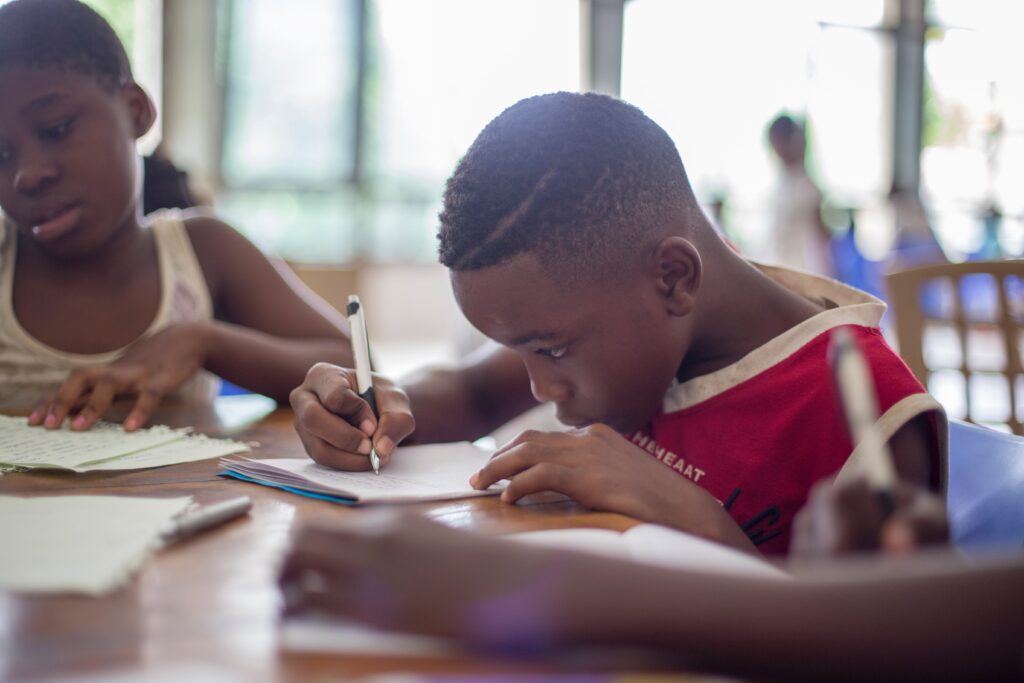
It is quite necessary he should know how to read; and not only so – the discipline of the task is altogether wholesome for the little man. At the same time, let us recognize that learning to read is to many children hard work, and let us do what we can to make the task easy and inviting.
Charlotte Mason, Home Education, p. 214
In this immersion, we will dissect how Charlotte Mason approached reading, copywork and dictation as described in Volume 1. You will look at how each element works together and how to implement these important tools in your homeschool.
Break Out II

E
Elementary School Science
Workshop Presented by Dawn Rhymer
If you are scared by the idea of its being science, call it a hobby and pursue it. It will be science all the same.
George J. Burch, The Parents’ Review, 1887
In this workshop we will explore how Charlotte Mason approached elementary school science (grades 1 – 6, Forms I – II). We will examine her philosophies and methods as applied to our younger science students, glean from the PNEU Programmes, discuss problems we might encounter, and share resources to help us with this adventure.

F
Jesus’ Bible Lessons
The Savior’s Discussion with Others Over the Word
Workshop Presented by Don Rhymer
Toward the end of A Philosophy of Education, Miss Mason writes of Bible Lessons, “It is only by trying the method oneself on such an incident, for example, as the visit of Nicodemus or the talk with the woman of Samaria, that we realise the wonderful clearness with which each incident is brought out, the fullness of meaning with which every phrase is invested by such personal effort” (VI, 272-273). This talk will focus on these two incidents, looking specifically at Jesus’ “little talk” or “Discussion” in each Bible Lesson. Though not the “Word” himself, we can still, by the Spirit, emulate Christ’s use of Scripture and questions. Such work should not only aid our child’s apprehension of the Bible text in the short term, but Lord-willing facilitate a potential greater recognition moment in the long term.
G
Handicrafts
Embroidering with Jane Austen
(This is a repeat of Session C.)
Workshop Presented by Lisa Hajda
In this workshop, Lisa Hajda will lead participants in embroidering a historically accurate white-on-white sprig pattern on the hem of a pillowcase. Participants will transfer the pattern with the prick and pounce method. Workshop attendees will be provided with basic pounce supplies as well as a pillowcase, needle, floss, and hoop. The cost of supplies is $10.

H
A Sense of Place
A Geography Immersion
Immersion Presented by Jennifer Taylor
The soil is the great connector of lives, the source and destination of all. It is the healer and restorer and resurrector, by which disease passes into health, age into youth, death into life. Without proper care for it we can have no community, because without proper care for it we can have no life.
Wendell Berry, The Unsettling of America: Culture and Agriculture
To have a sense of place is to have intimacy with the land and its people, past, present, and future. Charlotte Mason claims that the culmination of a child’s education is about how much he cares and about how many things he cares. A sense of place requires relationship, and when we create relationships, we care. One of the ways we discover a sense of place is through the study of geography. Charlotte Mason included Geography lessons throughout a child’s school education. We find that she was very intentional in the way Geography should be taught. Join me on a journey to a part of our beautiful world during this geography immersion. You will be the traveler and living books will be our tour guide. This experience will give you ideas for teaching geography and answer questions about what is included in a typical Mason style geography lesson.
Breakout III

I
Middle and High School Science
Workshop Presented by Dawn Rhymer
Where science does not teach a child to wonder and admire it has perhaps no educative value.
Charlotte Mason, Philosophy of Education, p. 224
Why are we tempted to trust Charlotte Mason with all subjects but science? Is it really possible for our older children to get a solid science education using Charlotte Mason’s methods and philosophies? In this workshop we’ll examine what Charlotte Mason said about science and talk about what science looked like for the upper forms. Then we’ll take a step back and see how this might apply to us today. I’ll share some resources available to help you as you guide your older children through science.

J
The Role of the Teacher
Workshop Presented by Karen Canon
If all education is self-education, what exactly is the role of the teacher? What does it mean to be ‘guide, philosopher and friend’ to our students? We will tackle these questions and others and define the role of the teacher and what that looks like in practice.

K
Map Making with Children
Immersion Presented by Christine Jauchler
But the peculiar value of geography lies in its fitness to nourish the mind with ideas, and to furnish the imagination with pictures.
Charlotte Mason, Home Education, p. 272
We will look at what Mason says about geography and how to implement lessons in your homeschool by using books such as “Map Making with Children” and “Geography from A-Z.” To help inspire your geography lessons at home, we will work through some map games and activities.

L
Framing the Soul
Creating an Atmosphere for Religious Family Life
Workshop Presented by Jennifer Taylor
The field of the habits of the religious life should afford many valuable matters for reflection and teaching; as, for example, the habitual thought of God in a family; the habit of reverence in thought, attitude, act, and speech; the habit of prayer as regards time, place, manner, matter; the habit of praise and thanksgiving…the habit of devotional reading.
Charlotte Mason, School Education, p. 144
Charlotte Mason wrote several essential principles for parents and children regarding the habits of religious life. In this workshop, we will explore these habits and share ideas for creating an atmosphere that supports spiritual formation in the home. In particular, we will be focusing on what Charlotte Mason had to say about the importance of a regular rhythm of prayer and devotion. We will discuss and practice some Mason inspired devotions including the use of the Book of Common Prayer, the prayer book that Miss Mason used as part of her Anglican Christian tradition. You will walk away with ideas and resources for the religious life of the whole family.